Painting Romance

Paint beauty on purpose

Three days to take one canvas from torn paper and texture paste to a dreamy, romantic oil painting, with symbols you choose to set the mood.

March 22 to 24, 2027 / Milan Art Studio, Sarasota, Florida

Mar 22 to 24, 2027Dates
In Person, 3 DaysFormat
15 ArtistsClass Size
$1,500Tuition

The fight over beauty started with a bad review in 1850

In June 1850, Charles Dickens reviewed a painting by a 21-year-old. He wrote that the boy in it was "hideous, wry-necked, blubbering" and that the kneeling woman was "so horrible in her ugliness" she would stand out "as a Monster" even in "the lowest gin-shop in England."

The painter was John Everett Millais, one of a group of young painters who called themselves the Pre-Raphaelites. The painting showed Jesus as a boy in his father's carpentry shop, dirt on the floor and all. The fuss got so loud that Queen Victoria had it carried to Buckingham Palace so she could look at it in private.

Dickens's real complaint, if you read the whole piece, was that beauty had been thrown out. Ever since Raphael, he wrote, beauty had been treated as something a painting needs, and these young painters were out to get rid of it.
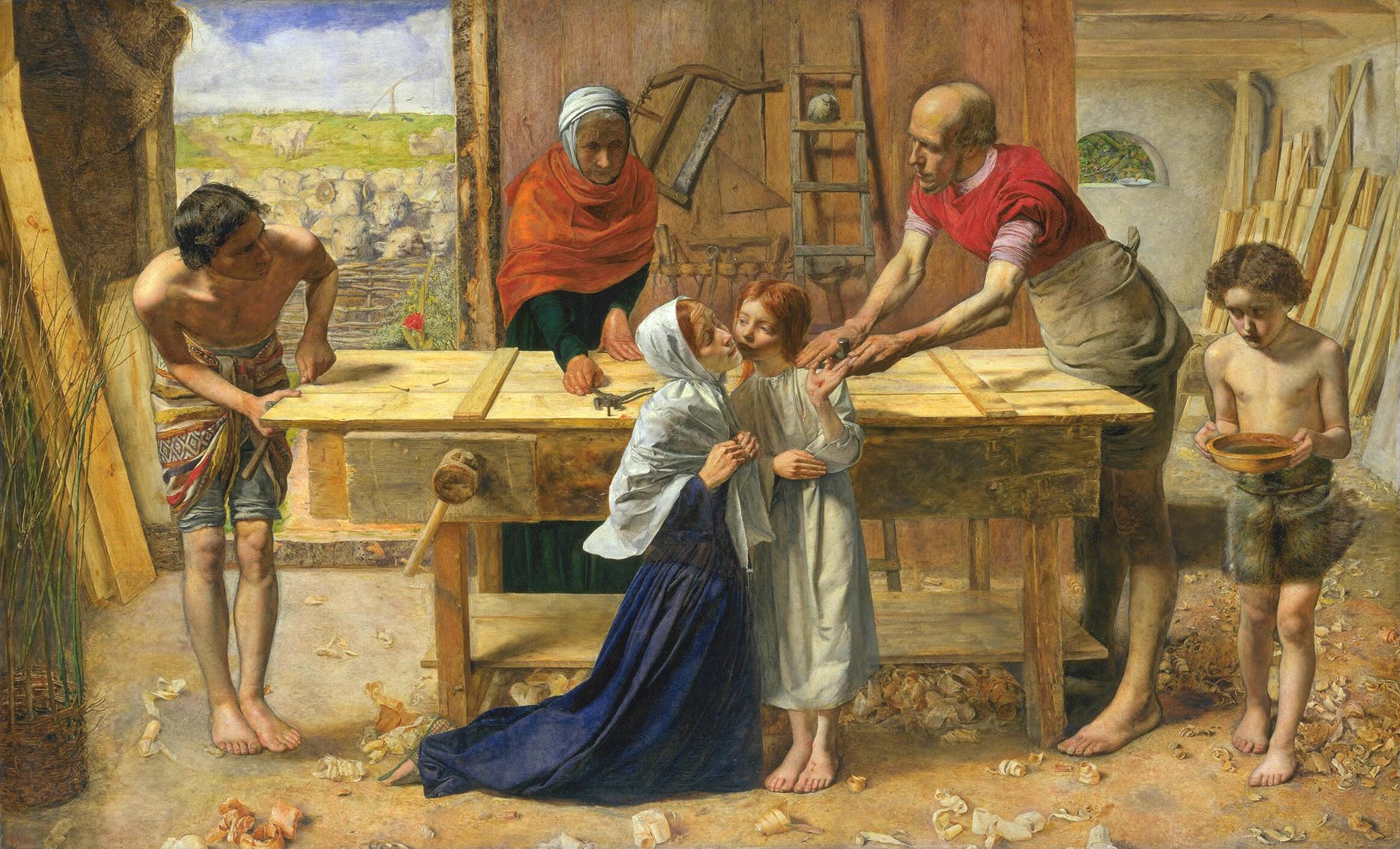
A boy with a cut hand in a carpentry workshop, his mother kneeling beside him, workers and wood shavings around them
John Everett Millais, Christ in the House of His Parents, 1849 to 1850, Tate Britain

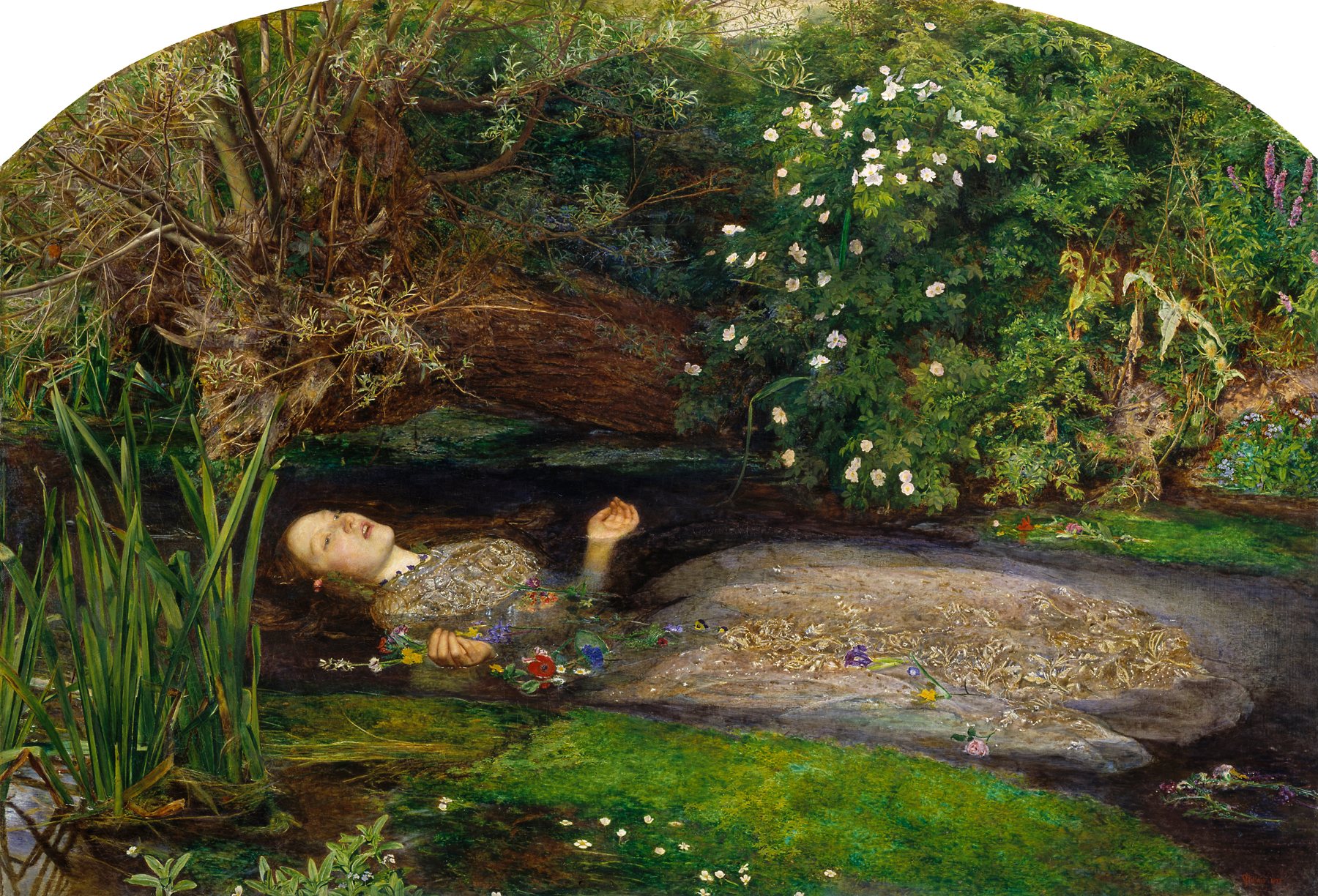
Two years later, Millais showed Ophelia

He spent five months on the bank of a river outside London, up to eleven hours a day, painting the water and the weeds. Back in his studio he put a young woman from a hat shop, Elizabeth Siddal, in a bathtub with oil lamps underneath, and painted her floating. The lamps went out. She caught a bad cold, and her father wrote to Millais demanding £50 for her medical bills.

Almost every flower in that water means something. The willow leaning over her stands for forsaken love. Nettles mean pain. Daisies stand for innocence, violets for faithfulness. The red poppy means sleep and death, and it isn't in Shakespeare's play at all. Millais put it there.

The Times said he'd soused Ophelia "in a weedy ditch." It went on to become one of the best-selling postcards at the Tate.

A young woman in a pale dress floating on her back in a stream, flowers in the water around her, a willow above
John Everett Millais, Ophelia, 1851 to 1852, Tate Britain

The fight is still on, and it still ends the same way

After the First World War, critics wrote the Pre-Raphaelites off as sentimental. In January 2018, a gallery in Manchester took a Waterhouse painting of nymphs off the wall of a room called In Pursuit of Beauty and pulled the postcards from the shop. Seven days later the painting was back. "Many people feel very strongly about the issues raised," the gallery's interim director said.

Painters still hear it: pretty means lightweight, and romance belongs on greeting cards.

We think beauty is a skill, and we'd rather teach it than apologize for it. Collage, texture paste, acrylic and oil are how you build the painting. A symbol in the right place, like Millais's poppy, is what makes it say something. You can learn it on purpose, and that's what these three days are for.

Build every layer with your teachers in the room

Collage and texture paste are decisions you make with your hands, and most of them can't be undone: how thick the paste goes on, where a torn paper edge sits under the acrylic, which parts of the texture the oil covers and which stay showing. On a video you watch someone else decide on their painting. Here you decide on yours, with your teachers in the room while the paste is still wet.

Day one opens with your own source (the photo, sketch or scene you'll paint from) and a conversation about what the symbols in it mean, which ones belong and which are noise. That's a conversation about your idea, and it needs the other person in the room looking at the same picture.

You also get to watch the other paintings in the room go through the same layers at the same time. Seeing what a thick collage does under oil next to a thin one, on canvases you didn't paint, is the fastest way to learn where your own should go.

Build one romantic painting from collage to oil

One canvas, three days, every layer chosen on purpose.

  1. Choose symbols that set a mood, starting from your own source
  2. Lay down collage and texture paste so they read as part of the painting
  3. Sketch your subject over the texture so the drawing stays sound
  4. Build depth in acrylic so the oil has something to sit on
  5. Decide when a surface is ready for oil, and what to leave showing
  6. Refine the painting in oil until the atmosphere is yours

What you'll leave with

  • A mixed-media painting with a romantic mood you built on purpose, taken from collage all the way to oil
  • A way of choosing symbols you can use on every painting after this one
  • The nerve to put paper and paste under oil in your own studio
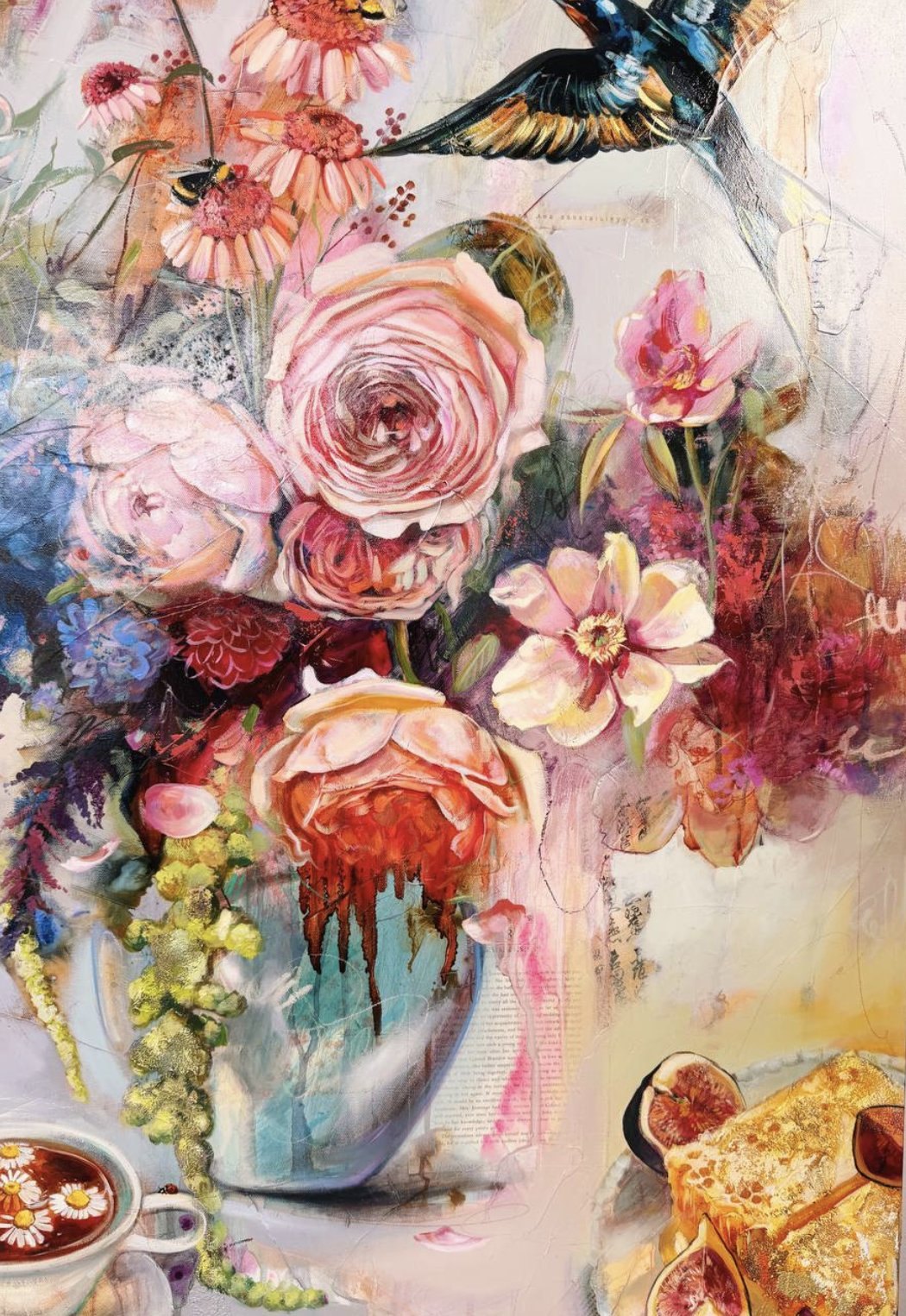
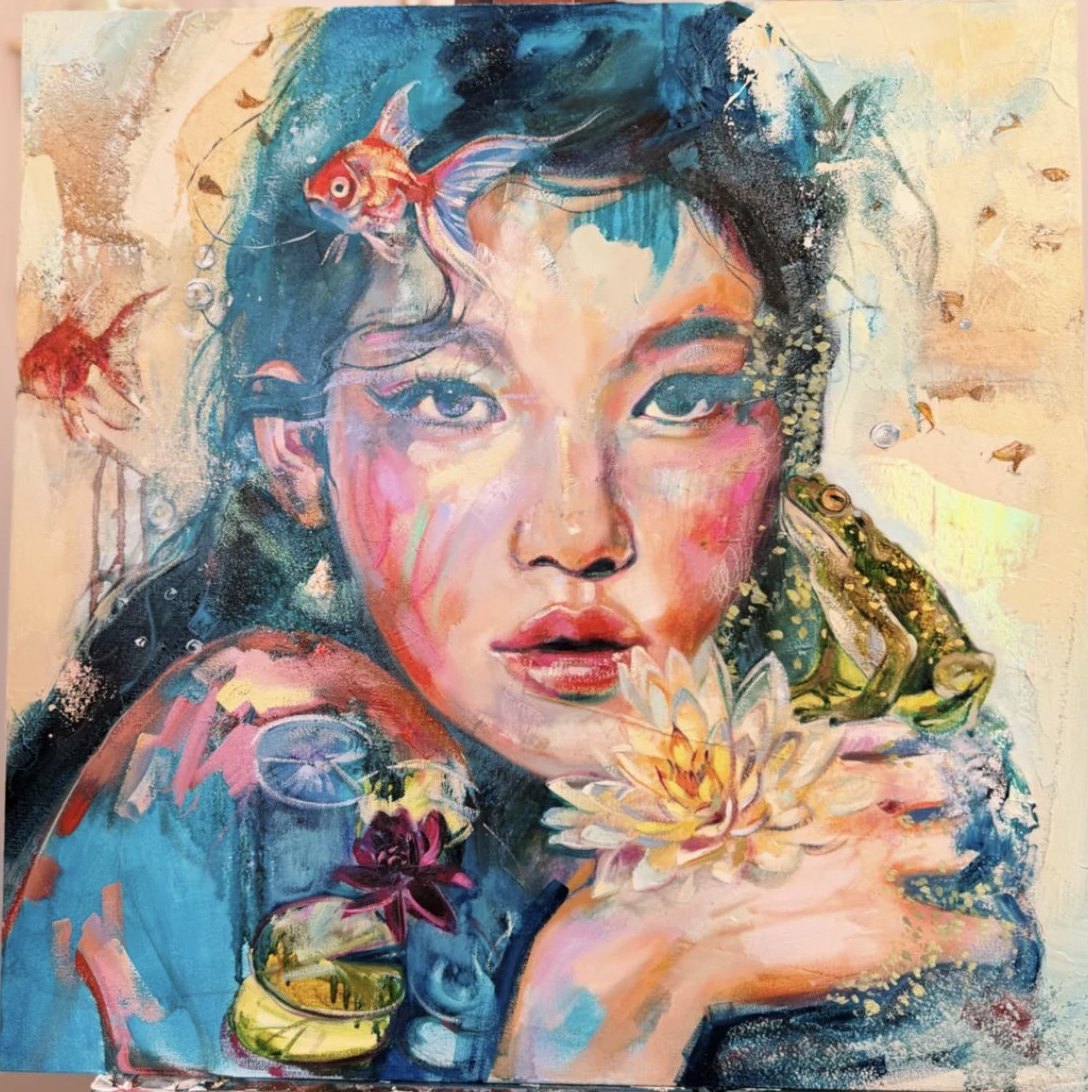
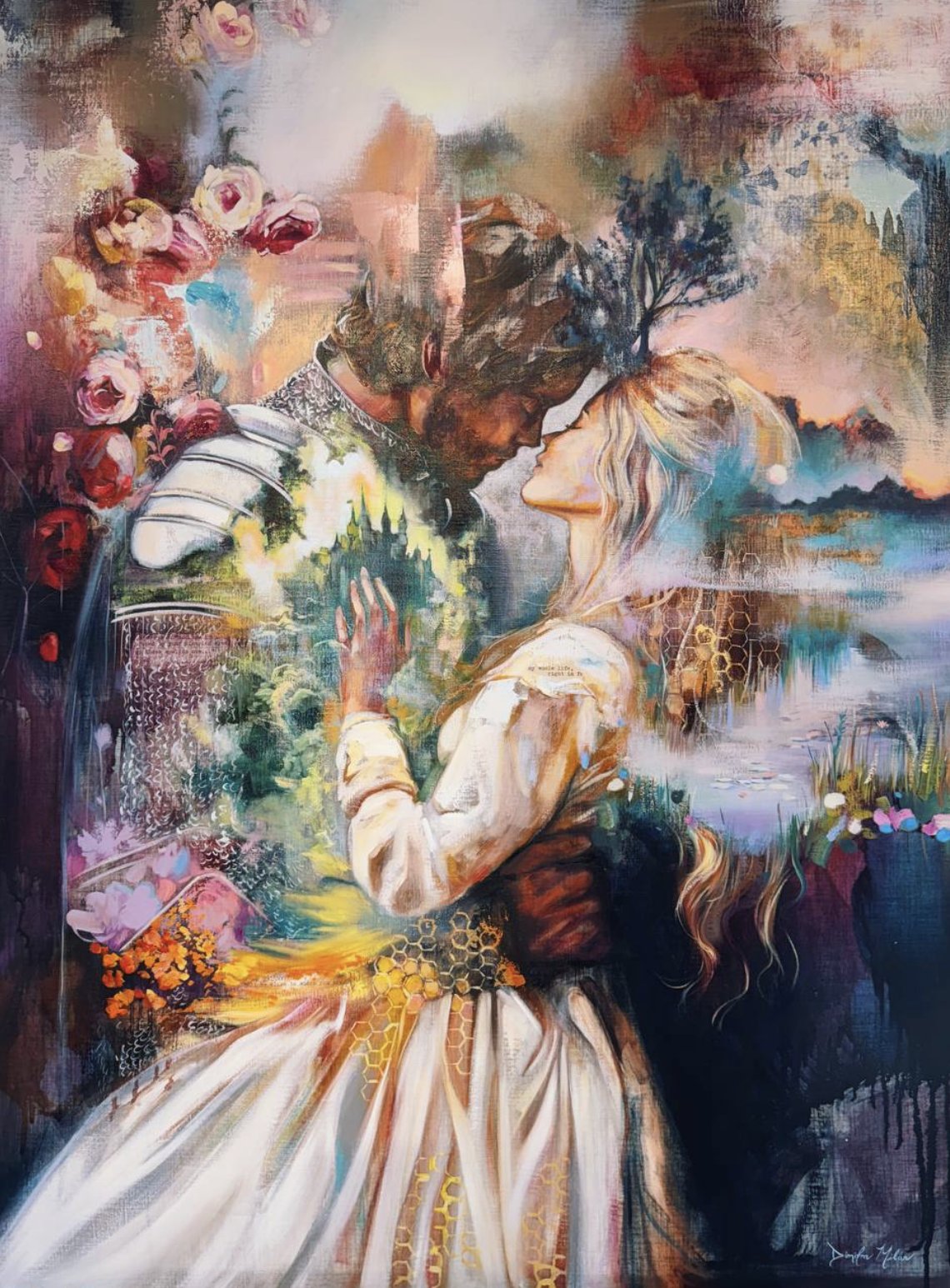
A painting in the style taught at Painting Romance

Take one canvas from torn paper to oil in three days

Day 1, Monday

Choose your symbols, then build the surface

At 10am, a presentation and discussion on symbolism and how to create mood, starting from your source, the photo or sketch you'll paint from. From 11:30 to 1, collage, texture paste and sketching your subject. After lunch, from 2 to 4, painting in acrylic.

Day 2, Tuesday

Build the layers in acrylic

From 10 to 1, painting in acrylic, building the layers and the structure. After lunch, from 2 to 4, you keep going in acrylic or move into oils, whichever your painting is ready for.

Day 3, Wednesday

Refine it in oil

From 10 to 4, with an hour for lunch, the whole day is refinement in oils, until the mood is yours.

Taught by Dimitra Milan and Constantino Milan

Dimitra Milan has painted professionally since she was 15. Her own paintings are built in layers of acrylic ink and collage under oil, with a dreamlike mood that has drawn collectors around the world. Constantino Milan brings a strong drawing foundation and a steady eye for form.

Get first pick of the 15 seats

Registration opens to the waitlist on Tuesday, January 12, 2027, two days before it opens to everyone else on Thursday, January 14. There are 15 seats. There's no cost to join the list.

Painting Romance Workshop

March 22 to 24, 2027 / 10am to 4pm daily / Milan Art Studio, Sarasota

$1,500

  • Three days at an easel in the Sarasota studio, 10am to 4pm, with an hour for lunch
  • Taught in the room by Dimitra Milan and Constantino Milan
  • Monday opens with a talk on symbols and mood, starting from your own source
  • One canvas, from torn paper and texture paste through acrylic to oil

Paint the thing they'll call pretty, and make it mean something.

The critics lost that argument, and lost it again in 2018. The postcards settled it.

Join the Waitlist

Questions

Do I need to be at a certain level?

It's open to all levels, and it's best for painters who want to experiment with mixed media. If you've never put collage under paint, you'll do it here with your teachers in the room.

How does the waitlist work?

Joining is free and holds nothing for you. Registration opens to the waitlist on Tuesday, January 12, 2027, 48 hours before it opens to everyone on Thursday, January 14. We'll email you the link. Seats go in the order people register, and there are 15.

Is there a payment plan?

Yes. You can pay in full or in 3 payments, and the plan is paid off before the workshop.

What will we paint with?

Mixed media: collage, texture pastes, acrylics and oils, on canvas. We'll send the supplies details before the workshop.

What are the hours?

10am to 4pm, Monday to Wednesday, March 22 to 24, 2027, with an hour for lunch, at Milan Art Studio, 8190 Uzita Dr, Unit 100, Sarasota, Florida.

Where should I stay?

We'll send a list of places to stay near the studio when registration opens.

What is your refund and cancellation policy?

All sales for in-person events, including workshops, retreats, intensives, and other experiences, are final. We do not offer refunds or credit for cancellations or no-shows. Funds cannot be transferred to another event.

By registering for any in-person event, you are agreeing to this policy and helping us maintain a smooth and well-prepared event experience for all.